Tasting notes:
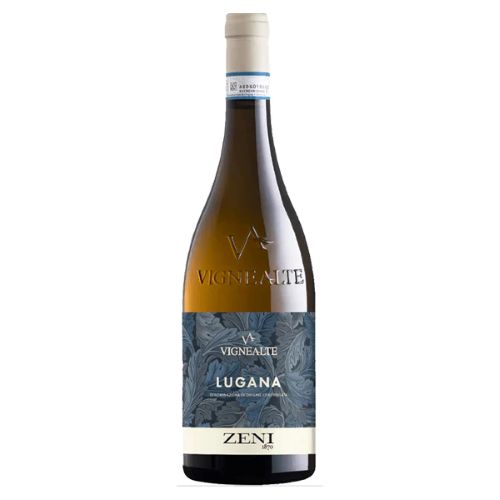
Lugana doc Vigne Alte, Zeni. Straw yellow in appearance with a greenish tinge. On the nose, intense and rich, with fruity hints of peach and citrus fruit.
Food Match:
Ideal as an aperitif, with fish starters, soups. Or, try with main dishes made with fish or white meat.
Region/Producer:
Zeni’s journey began with Bartolomeo Zeni in 1870. A painter at heart but importer by trade. He transported goods across the region – fish, olive oil and of course wine. Gaetano, his son began to trade more exclusively with wine. At this point the seeds of their modern business model were planted. Gaetano, referred to as ‘Nino’, was the innovator in this family affair. Identifying a rapidly expanding export market and moved production in the 1950s from a small winery in Bardolino to a more spacious site with spectacular view across Lake Garda.
Nino set up their own Wine Museum in 1991, aiming to endorse the culture and the story of their wine production in Bardolino over the years. It is set inside the Zeni Winery in Costabella, with panoramic views of Lake Garda coupled with the hills and slopes that stretch towards it. The museum was intended to offer a rich story of ancient winemaking which Zeni has been a pivotal part of. Francesco Gaetano’s eldest son had 7 children himself and instilled a strong passion for wine production and the Zeni family name and business. The original values are still central to production today, with Fausto, Fredrica and Elena following what was laid before them.
Vineyard: Lugana doc Vigne Alte Zeni
The estate is located in the 5 Veronese DOC areas over 25 hectares; Bardolino, Lugana, Valpolicella, Soave and Custoza. Which extend from the south-eastern shores of Lake Garda to the Hills east of Verona. The Vineyards are situated on fertile and chalky soil of murrain or marl. The marl adds depth, structure, minerality and freshness. Where the murrain soil meets the clear marl, they give fine, light gravel that enables aromatic finesse.
The production within Zeni Winery has undergone a radical reconstruction in current times, both in building extensions and improved technological development. The use of temperature-controlled stainless-steel vats, soft pressing of the grapes, cold skin contact for the white wines has enhanced the high quality of the grapes grown in their vineyards.