Tasting notes:
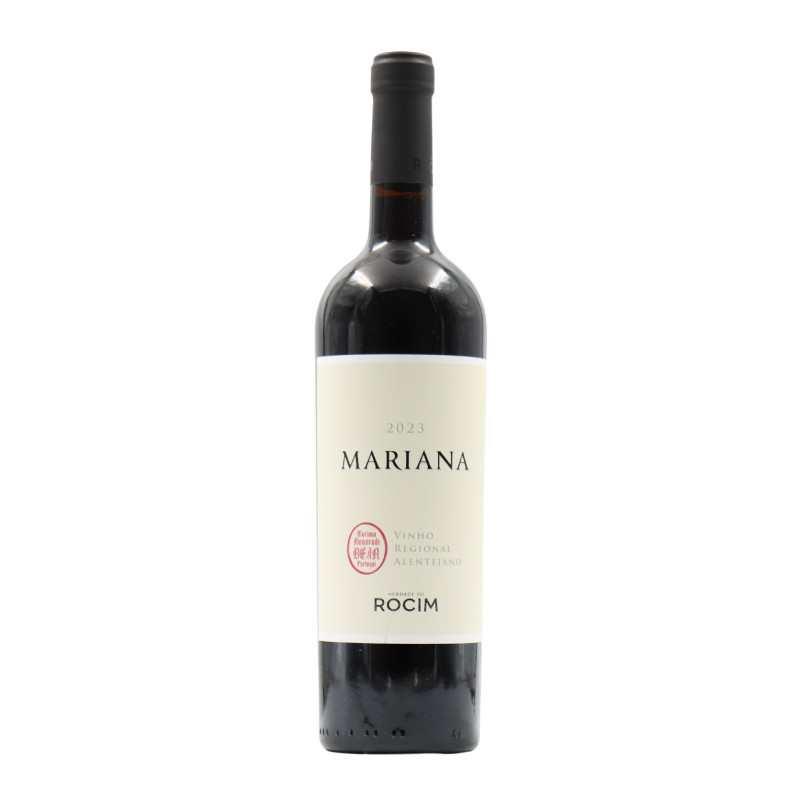
Herdade do Rocim, Alentejano, Mariana Red. A vibrant blend of native Portuguese grapes delivering exuberant aromas of red berries complemented by subtle spicy and chocolate notes. Juicy, with silky tannins enveloping the fruit through to a long, delicious finish.
Food Match:
Try this wine with Beef, Lamb, Veal or Poultry.
Region/Producer:
Herdade do Rocim is an estate located between Vidigueira and Cuba, in the Lower Alentejo. It comprises 120 hectares, 70 of which are made up of vineyards and 10 hectares of olive trees. Since its inception in 2000, Herdade do Rocim has invested heavily in the vineyards, replanting vines and introducing new varieties. They cultivate the vineyard sustainably and are associated with the Sustainable Program of the Alentejo Viticulture.
They are pioneers in ‘amphora wines’, following the ancient traditions of vinification in pots known as ‘Talha’. The vineyard is cultivated manually and minimal intervention is used in the cellar, to produce fresh, elegant and mineral wines. In 2018, Herdade do Rocim was awarded Best Wine Producer by Revista de Vinhos.
Vineyard: Herdade do Rocim, Alentejano, Mariana Red
Herdade do Rocim is associated with the Sustainable Program of the Alentejo Viticulture. This wine is made from organically grown grapes; 70% of the vineyard is certified and the remaining 30% is in conversion. The estate is situated on the Vidigueira fault, a 30 mile long east-west facing escarpment which rises to 420 metres.
The fault significantly influences the climate, trapping the cool, humid Atlantic winds, so despite its southern location it is one of the most temperate sub regions in the Alentejo. These cooling and humid influences descend at night, creating diurnal temperature differences of 15°C which extend the ripening period; with the warm days concentrating the flavours in the grapes, while balancing natural acidity is retained during the cool nights. The soils are of granitic and schistous origin. The water level in the soil is rich and superficial, nourishing the vines during the warm summers. All grapes are manually harvested.